
Yūgen
expressing the inexpressible.

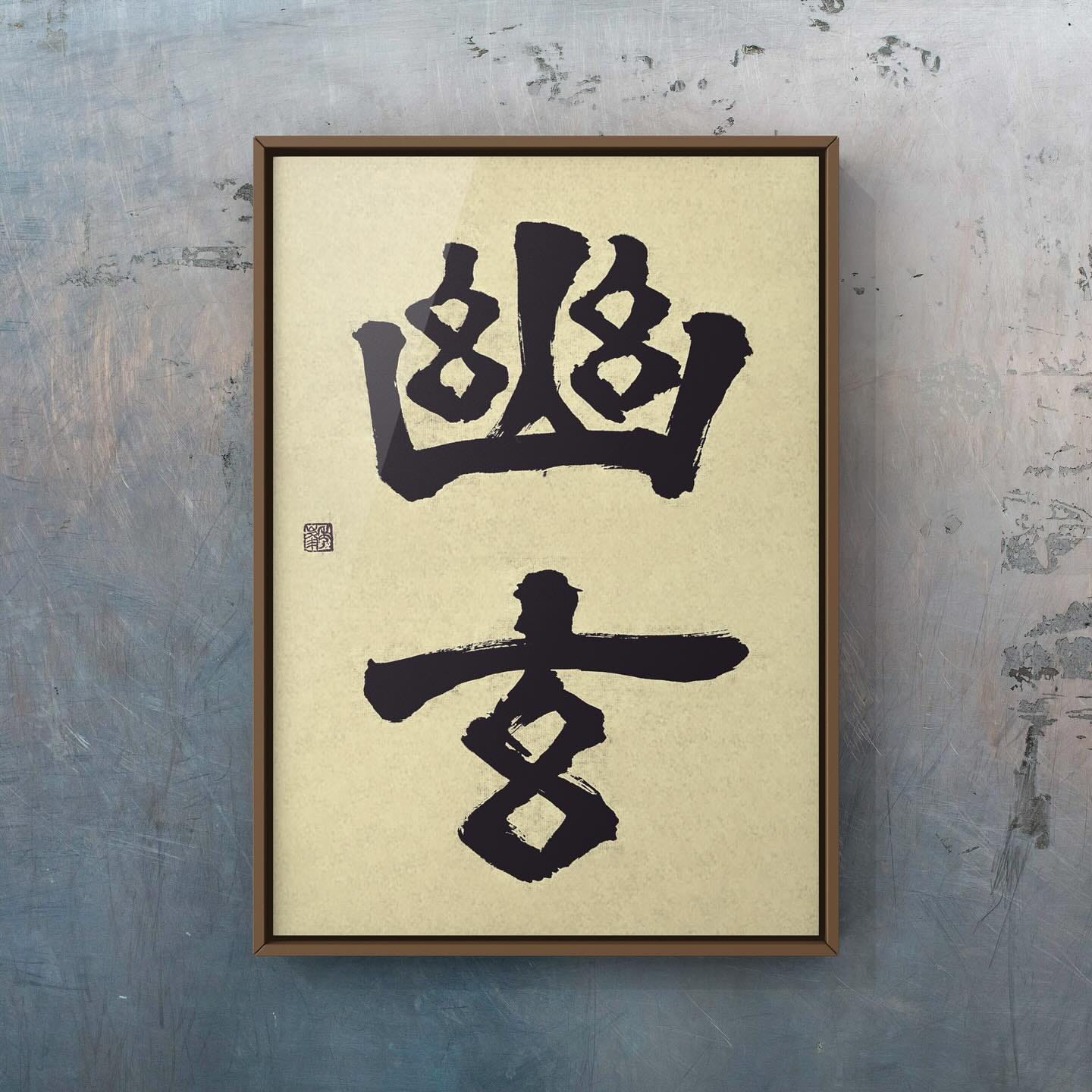
Yūgen is an important concept in traditional Japanese aesthetics.
The kanji (characters) of yūgen 幽 (yuu) translate as “seclude, deep, feint, dark, tranquil, calm”. 玄 (gen) mean mysterious, black, deep, profound. I particularly like the explanation made by a Zen teacher John Daido Loori, who explains that the vertical line in 幽 represents the mountain and the two curly lines on each side portray the mist in the valley that invokes a quality of something being hidden. (Loori, 2004: 192).1
Across cultures mystery is often associated with the death and the unknown; the darker side of life. It is what drives one to explore spirituality and question our existence; the unknown holds a space for discovery. This deep emotional awareness, is about experiencing the profundity of a situation that cannot be expressed in words.
The subtlety of yūgen can be found in poetry and arts but perhaps to you or me the feeling of yūgen can be triggered by looking at the sky at night, seeing the stars shining brightly and knowing that this sky is shared with so many others on the planet, in that exact moment. We may even contemplate for a little longer and think about our solar system and the two trillion galaxies in the observable Universe, that we are a part of.
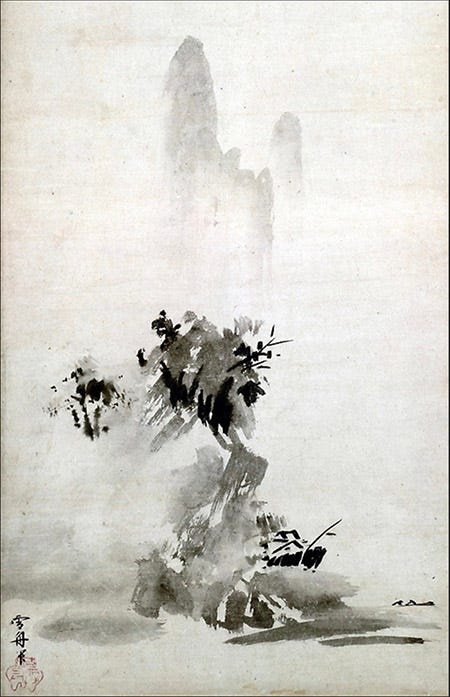
D.T Suzuki describes yūgen as
“it is hidden behind the clouds, but not entirely out of sight, for we feel its presence, its secret message being transmitted through the darkness however impenetrable to the intellect” and he carries on “we must remember that Reality or the source of all things is to the human understanding an unknown quality, but we can feel it in a most concrete way” (Suzuki, 1959: 221).2
To me, Suzuki’s quote speaks of the emptiness or the ‘nothingness’ from which all things are evolving and dissolving into. As the Tosa Matsuki says “the maximum of fulness is void” (Earhart, 1974: 139). 3
Loori, J, D,. 2005, ‘The Zen of Creativity. Cultivating the Artistic Life’. New York: Ballantine Books New York
Suzuki, D.T., 1959. ‘Zen and Japanese Culture’. New York: Princeton University Press
Earhart, H.B., 1974, ‘Religion in Japanese Experience: Sources and Interpretations’. California: Dickenson Publishing Company, pp. 128-45.