
Wabi, Sabi.
not merely an aesthetic ideal...

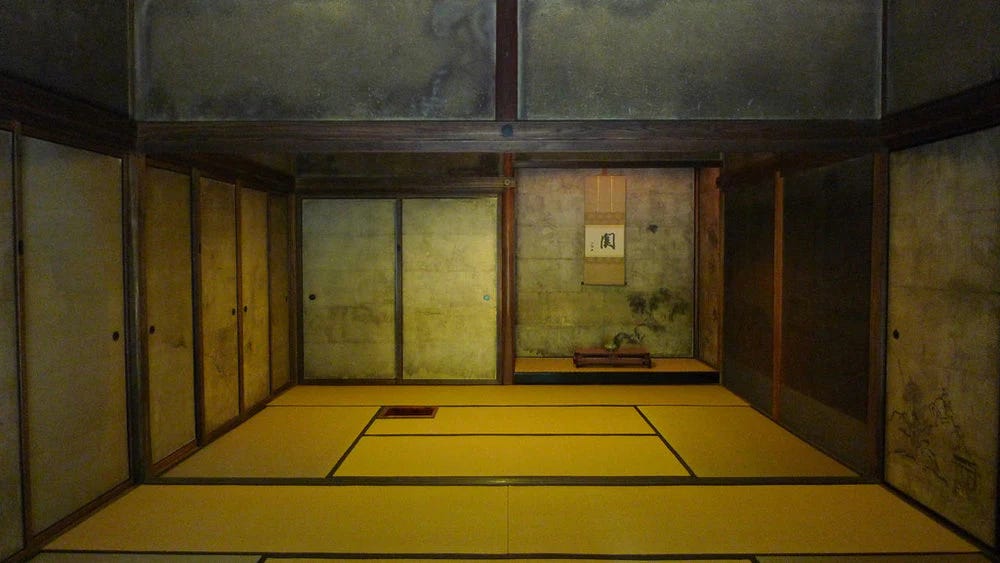
Wabi, Sabi.
Writing about the concept of wabi, sabi1 as a Westerner feels like an ambitious undertaking. I want to begin by acknowledging this epistemological distance, before I attempt to briefly navigate through the concept. I’ve been learning Japanese for about six months, and although I’m not able to fully engage in conversation - beyond perhaps ordering a cup of tea or asking for directions - I can already sense that the Japanese language has a remarkable capacity to illustrate mood, atmosphere and emotional subtlety. In contrast to English, which often relies on direct articulation, Japanese frequently employs indirect, context-dependent language. This inclination toward subtleness is conveyed by the aesthetic and philosophical concept of wabi-sabi. Difficult to translate directly, wabi, sabi refers to an appreciation for imperfection, impermanence, and the quiet beauty found in simplicity.
The initial inspiration for wabi, sabi principles come from the ideas around acceptance, simplicity and naturalness found in Daoism and Zen Buddhism.
D.T. Suzuki suggests that wabi can be translated as ‘poverty’- not in a material sense alone, but as a state of being unbound by wealth, power, or social status. It implies a deliberate simplicity and an inner capacity to remain deeply connected to values that transcend conventional notions of success2.
Sabi literally means ‘solitude’ or ‘loneliness’; qualities that set perfect conditions for living a rich, contemplative life. Koren shares that the meaning behind wabi, sabi began to evolve around the 14th century in the direction of aesthetic values.3 He suggests if one wishes to focus on the differences between wabi and sabi and treat them as separate, wabi refers to: a way of living a spiritual life, subjectivity, inward thinking and a philosophical concept. On the contrary, sabi refers to physical objects like art, objectivity and an aesthetic ideal.4
Let us now look at few wisdoms that has been incorporated into the concept of wabi, sabi:
All things are impermanent - everything wears down; our bodies, ideas, great art,hard solid big rocks and mountains, the planet - all forms fade into nonexistence.
All things are imperfect - if we pay attention we begin to notice that nothing exists without flaws; a notion particularly familiar to those who consider themselves makers. A glaze on a handmade clay cup varies across all pieces, giving it a special character.
All things are incomplete - everything is a constant, never ending state of becoming, without a final destination; acceptance is inevitable.
As we can see wabi, sabi is not merely an aesthetic ideal, but a worldview which originated in Zen Buddhism, that values transience and emotional depth over permanence and clarity. The very existence and everyday use of “wabi, sabi” underscores the deeply intuitive and often poetic nature of the language - one that prioritises emotional nuance and cultural context over linear clarity - as well as a rich historical connection.
If you are interested in the subject of Zen Arts you may also enjoy:


Deep bows, Kasia
In my conversation with Tanahashi Kazuaki he pointed out that Japanese people don’t use “wabi-sabi” as a stand alone word; which is a Western translation. Both Wabi and Sabi are individual concepts that are used together when describing an aesthetic.
Suzuki, 2019, p.23
Koren, 2008, p.22
Koren, 2008, p. 23
Really good short summary. Thank you Kasia. It’s a shame that something quite difficult to really explain has sometimes become a superficial a lifestyle “brand”in the west in recent years.